
When a US court ruled that Bitcoin is money
Originally published on my Substack on Sep 17, 2020
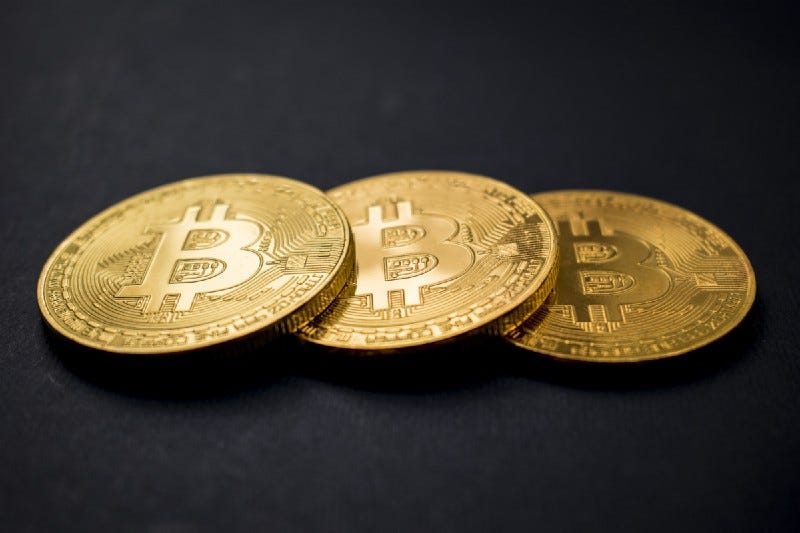
Photo by Dmitry Demidko on Unsplash
It was February 2020, when Larry Dean Harmon was arrested for owning and operating Helix, a Bitcoin ‘Cleaning’ business more popularly knows as a Cryptocurrency Tumbler.
Tumblers ‘dilute, co-mesh, and mix identifiable cryptocurrency funds with other funds so as to obfuscate the origin, possession, and movement of cryptocurrencies, for a fee¹. As you can imagine this service was popular amongst those who did not want to leave a trail of their illicit dealings on the Dark Web.
Harmon was charged with a conspiracy to run a Money transmitting business without obtaining a license under the District of Columbia’s Money Transmitters Act (MTA) and failure to register with US Department of Treasury’s Financial Crimes Enforcement Network (“FinCEN”) as a “Money services businesses” (MSB) under the Bank Secrecy Act(BSA).
Harmon moved for dismissal of charges on the grounds that Helix transferred Bitcoins which were nothing but mere digital tokens on a Blockchain ledger and not real money and hence Helix was not a Money transmitting business as much as it was a blockchain business and hence does not fall under the purview of the MTA.
In July 2020, the court dismissed Harmon’s motion stating that “Bitcoin is indeed money ² ”
Let’s look at the regulations first. In March 2013, FinCEN issued guidance on the applicability of the BSA to what they called ‘virtual currencies’³. FinCEN said that any entity engaging in the issuance or exchange of virtual currencies as a business is an MSB and thus needs to register themselves with FinCEN and satisfy all other requirements of the BSA.
FinCEN’s regulations define the term “money transmitter” as a person that provides money transmission services, or any other person engaged in the transfer of funds. The term “money transmission services” means “the acceptance of currency, funds, or other value that substitutes for currency from one person and the transmission of currency, funds, or other value that substitutes for currency to another location or person by any means.
The definition of a money transmitter does not differentiate between real currencies and convertible virtual currencies. Accepting and transmitting anything of value that substitutes for currency makes a person a money transmitter under the regulations implementing the BSA³
That’s a pretty airtight definition in my layman, nonlegal opinion and so I can see why Harmon’s lawyers decided to strike at the very heart of the argument. You see FinCEN’s 2013 guidance focusses more on the definition of a ‘Money Transmitter’ and not so much on the ‘Money’ part of it. So Harmon asked the question that if cryptocurrencies are not money, then why should any Monetary regulation act apply to them. I think the question is valid philosophically but the legal argument was rubbish. Helix helped cover-up trails of illicit transactions on the Dark Web by literally laundering clean tokens for ‘dirty’ ones. That kind of stuff is FinCEN’s raison d’être.
But I don’t want to get into the legal soundness of Harmon’s motion. This case and the court’s dismissal of Harmon’s motion leads me to ask fundamental questions about the nature of money. What gives the government and its legal agencies the right to decide what is money and what isn’t? Isn’t money an instrument to perform trade and store value? If so, how is Bitcoin money the same way the US Dollar and other national currencies are when they are not even the same thing? Can I be facing similar charges as Harmon if I use Video game virtual tokens to barter stuff with my friends? And more broadly, what makes something money and what doesn’t?
Let’s break this down. On one hand, you have the technology- Blockchain, which is literally an immutable public ledger that maintains a permanent record of every single transaction on its platform. Then there is the application of the technology-cryptocurrency, in this case specifically, Bitcoin which primarily evolved as an alternative to government-issued money. One of the biggest motivations behind the development and the resultant popularity of cryptocurrencies was the relative anonymity that they provide. Once could argue cash is perhaps just as if not more anonymous as bitcoin but covertly buying a Kalashnikov on the Dark Web from a seller on the other side of the world is difficult using cash. But all the cutting edge technology could give these blockchain tokens value till people (not a government) decided to deem it valuable. And when they did, they went all the way.


 Himanshu Atre
Leave a comment